
Game Plan: Episode 4: Expressing Your Best Self With Dr. Rick Wells
Are you living as your best self—or just chasing success? In Episode 4 of the Success Tax Podcast, Eric Green and Tony Carter sit down with Dr. Rick Wells to explore the “E” in the G.A.M.E. P.L.A.N. framework: Expressing your best self. Dr. Wells explains how fulfillment comes from aligning with the strengths you already possess—not chasing something outside yourself. Through reflection, intentional habits, and meaningful action, you can lead with purpose and clarity. They discuss how tools like journaling, mentorship, and feedback help uncover your true identity—and why defining yourself by what you do (inspire, serve, lead) matters more than any job title.
—
Watch the episode here
Listen to the podcast here
Game Plan: Episode 4: Expressing Your Best Self With Dr. Rick Wells
What Expressing Your Best Self Means
Everyone, thanks for joining us again on the show. I’m Eric Green. I’m joined by Tony Carter and we are continuing to break down game plan. Dr. Rick Wells is back with us again, and we’re going to talk about E, which is expressing your best self and how you show up and how you do that. I’ve been wrestling with this. With no further ado, let’s hear from the expert, Dr. Wells, working through this. Expressing your best self, what does that mean to you?
It’s intentional and it’s intentionally engaging your best self. It’s something that needs to be uncovered rather than discovered, because you’re both very successful in your fields, families, income, and your mindset towards service. What I am saying is the ability to communicate how you overcame and how you continue your climb.
In order to contribute more, it should be communicable, so work. You’ve succeeded. You’ve done things that you are proud of. How’d you do it? That reflective activity and being able to express to your loved ones to your community to a wider audience, how you did such a thing and a company, the Narrative with the frame is what I’m talking about. As an educator, that model of showing and telling is the telling part who.
We mentioned last time. I’ve watched these people who have been interviewed who are billionaires, who will tell you, “I just set out to fix something.” It’s amazing when you can help a lot of people, how a lot of people will pay for it. It’s funny. There’s was a Dilbert comic where the point is, “Beware the advice of the super success. They don’t want company,” but it’s the opposite because people who are very successful and maybe we’ll leave the athletes and the musicians and stuff out of it. In business, the people that are super successful because they set out to change something, are usually pretty open about what they did that work and what they did they didn’t work.
There’s an interesting book called The Third Door. It was written by young guy, Alex Banayan who went to pre-Med and realized he didn’t want to be pre-Med. He’s reading books on all these famous people but none of the books talked about at the time how they did this. You hear about Steven Spielberg walked onto a lot and became a director. They get this generic, so he set out to write that book and he went and interviewed all these people who eventually would sit down and be interviewed.
The reason he calls it the Third Door is he said, “There is the front door where the line is down the block and you’re hoping you’re on the list and they’ll let you in. There is the back door, where the VIPs go through the kitchen and get ushered to their table. There’s always another way, a window or a side door climbing in through the basement.”
Many of these people would not be denied. They’re not going to sit in the front row. They can’t go in the back door and they found another way to get to where they needed to be. The point is this, when you are building and you are successful, I find that most people do want to share that and help reach back and help pull somebody else up.
Showing up as your best self is easy to say but for a new entrepreneur or anyone who’s in it, what’s that internal process? What is that odyssey? Should you journal at some point? Should you see conversation or mentorship through someone that can point out some areas of growth for you? What does that look like?
It’s all of those things that we talked about how you need to reflect and communicate. I think what Eric was alluding to is be solutions oriented. Most people are conflict oriented. They’re focusing on the problem rather than the solution. It’s different. What are we going to do? Not what the problem is, and just being principled for me. For me, when you find yourself in the dark wood, the best advice that I heard was to read and gain that perspective, journal and reflect.
Most people are conflict-oriented—they focus on the problem rather than the solution. Be solutions-oriented. Share on XI heard you find this fundamental idea. I was reading in the library in San Diego when I was trying to find out what to do next. I came across this series of books on the Western tradition reading the greats and find that fundamental idea that just moves you. I was like, “That’s what I’m going to do.” I chose education. Once you decide to study that idea and move forward, you read, reflect, and you resolve. You resolve to do something. That’s the beginning of the journey.
Expressing your best self, but once you start, it’s based on the key, the shortcut to it. I said, “Don’t follow shortcuts,” but the shortcut to it is to reflect on your life and see what’s choose a success and I would take it further. I would say choose a success in work, health, your family, your spirituality and your wealth. Choose a success and examine what it is that allowed you to be successful. That is you being your best self. Now, deliberately and intentionally design a life where you’re doing more of that, rather than less.
Gratitude, Growth, & The Pursuit Of A Flourishing Life
I have a lot of thoughts. Part of this is also being, happy is such a bad word to use for this, but being good with where you are and we’ve spoken about this before. Many folks decide, “I’ll be happy when I have this.” At some point, look at what are you good at and what your successes. Be thankful for that. Be grateful for that. You can keep working on all those. You don’t stop but the issue is you also don’t want to hold back that you’re not going to be happy. You’re going to be sour until you get something because you’re going to find that once you get there, you missed out on a lot.
It’s very hard when you’re in the middle of it. I have a difficult time enjoying the trip, the adventure, and the journey itself because I tend to be very just me. My wife says this to me like Yoda. She’s like, “Don’t lose sight of where you are, who you are and what you’re doing and be grateful for that. Otherwise, you’re going to turn around one day and it’s gone.” All that time went because you didn’t spend with friends or family because you were so focused on whatever.
It’s hard to do when you’re in it, but it gets back to this. I found I had to find gratitude to show up and be, let’s say pleasant but be myself because time spent with the family on the weekends waste of time. I had to work on my business. I had to move the ball forward and I’m better about it now. I wouldn’t say I’m perfect. I’m sure my wife will tell you I’m far from perfect but she would say, “You are definitely better. You’re at least more present than you used to be.” That’s intentional in.
The goal is not to be perfect. The goal is to be reverent, so that outlook is helpful. As humans, we can handle the paradox of being grateful and moving forward. Don’t get caught up in either/or attitude. It’s both and, and you can handle it. It’s simple but both and is not easy but no one wants easy answers. We talked about that before. That’s the shortcut. You’re having a longevity mindset. This is how what I’m committing to doing the damn thing. This is me slogan up the mountain bringing my best self with my mentors and with my support.
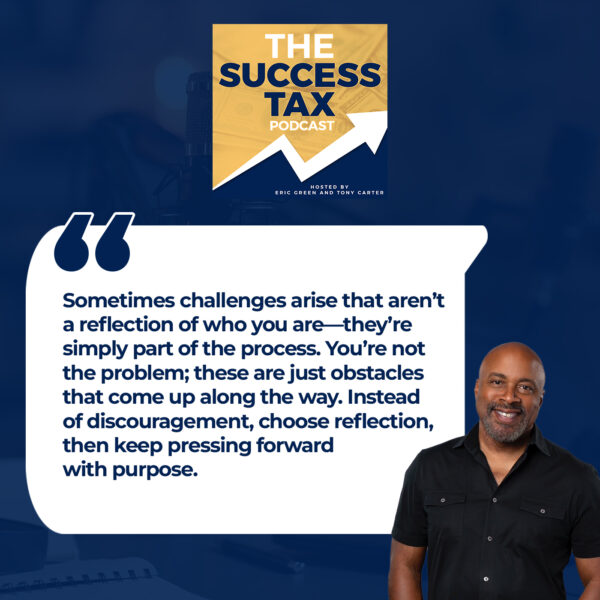
I like the way you framed it before that it’s reflective. That reflective process is ongoing. I would only offer to them, just a thought I have, is that while that’s important to do that. We do it. Am I being my best self? Am I meeting my objectives towards my larger goals? Sometimes, it’s a process so things happen that may not necessarily be you. You’re not the issue in the process. It’s just a matter of, “This is something that came up along the way.” We’ve experienced that here. It’s part of our process. We’re not to be discouraged by that. We are to be reflective but then keep pressing forward.
It’s about worthwhile. Eric mentioned, he doesn’t like the word happiness. I think it’s because it’s misinterpreted. Replace happiness with flourishing. Life, liberty, and the pursuit of a flourishing life. The first responsibility that you have is to outline what is a good life for you. What I meant by choosing a success in all of those areas of life, the coaching wheel, meaning your work, your family, your health, your spirituality, and your wealth is, you want it complete. It’s not about making all the money and having an unloving relationship with your children. That zeroes you out. Putting that and being mindful and making the plan to engage a worthwhile life, a flourishing life and showing up at someone that is worthy of that.
You talk about what is a rich life. It’s not dollars in the bank. It’s time with family, being able to have the freedom to do what you want, and add to your community. All of those things add to a rich life. I will tell you, to go back. What I was struggling with every day, I was constantly and wasn’t present. Here’s what I found. We’ve had this conversation number of times, I got to the point where I’m like, “My wife is going to lose patience with this in me.”
Forcing myself on the weekend to not work. I still get up at like 4:00AM and I’m going to work till 7:00 or 7:30 when they get up. I have to tell you, I started to feel better, the break. I began to have other ideas. Things that I had been so hung up on and stuck on. On Sunday and Monday, I’m like, “Huh?” You have to sometimes step back and take the break. It’s good for you. It’s good for the people around you.
It’s also reflecting to how you’re showing up because I never thought about it. I was serious guy and my wife was like, “No, you’re an *******.” She didn’t quite put it that way, but the point she said, “You’re sitting there. I don’t know if you’re sulking. You’re clearly not interested. Everyone sees that and everyone feels that. Your children feel that. You’re not showing up as your best self.”
Reflect, Define, & Express Your Best Self
It’s funny. I was working for a company and we were doing leadership development training. One of the exercises and one of the courses was titled, what do they see when they see me coming? Oftentimes, the idea is that how we think people see us or how we are presenting ourselves or expressing our best selves might not be how others interpret. To answer your wife’s comment. It’s getting all that out on paper or however, you’re going to note it and then getting the feedback of others. Honest and truthful feedback. You got to hear it It’s not going to make you feel good, but then realizing that it’s what’s required to show up and to express your best self.
It requires leadership and when you’re not in a leadership position, you should be a student. When you’re a student, you write stuff down. The reflective process, I take it from the story of Medusa. She’s the symbol of being stuck, being in a despairing mindset. Perseus, the shield and the act of reflection was able to cut her head off.
When you're not in a leadership position, you should focus on being a student. Share on XThe story continues, though. As her body was laying on the ground out of her blood flew Pegasus, the sign of creativity and Chrysaor, the warrior wielding the golden sword of discretion. When you reflect, what went well? That is your gratitude. What is it? What will I do differently next time? It’s an actionable way to reflect and then, how can I show up for my wife better? How can I show up for my children better? How can I show up for my employees and my business better?
Now, take that and move forward, that reflective process that helps with discretion in your decisions. If you want to release that creative energy, that’s how you do it. It’s an internal process. The world with all its distraction and its lack of a plan for your life is not going to do. It’s not hope and a strategy. Honor is. Honor your body with nutrition and movement. Honor your family with time and intention. Honor your work with elegant and self-expression. Honor the divine by engaging your talent in virtuous activity with the wider community. Honor your wealth and your treasure with finding the good life. Honor over hope.
You had mentioned in one of our conversations and I love the conversation we were having over coffee, talking about who are you. I said my word, then you mentioned you have a passion and you’re an educator or education.
I educate and inspire, yes.
How you were able to express that in your time in the military or cultivate it and as an educator in Connecticut, and now in the financial services world as a financial advisor. It’s because you found out what your passion is and who you are. You’re able to transition from area to area, discipline to discipline, without losing yourself and still remaining passionate.
It’s a function of identity. Who you are is a very I am and what’s the descriptor. I am an educator. I educate and inspire. That’s what I do and how I sublimate that was through in the Marine Corps, as a school teacher and an advisor. I can choose how to supplement that.
It’s the same thing, you’re educating. It’s just a different setting.
It’s beyond that. Where is your identity? What do you identify with? What is that calling? You find it and you define it. It’s the Socrates’, define your terms and Stoic, “Don’t do a thing without a purpose.” What’s the purpose? That’s the answer. That’s what I do and your unapologetic about that because you put the work into find that that inner work. You embrace it and that’s how you go out into the world and it’s very soul satisfying.
What are you about? What do you do? What is it that you do? I’ll ask and that’s what we’re having a question about. What is it? Most people will answer that with a noun. “I’m an accountant or an attorney or a teacher.” I said, “What do you do?” You get one verb. What’s the verb? I educate. You influence. You lead those. That’s what you do now. What does that mean? Do the work to figure it out. You have a couple decades, so get to work.
You have some time. You got all the time you need. We’ve hit the G in game plan, which is games have rules and all the float from that, which was wonderful.
It’s your way of life.
We then not touched upon the A, which attitude and attitude is everything.
It’s your way of thinking way of thinking.
We’ve hit the M, which was one of my favorites, what I start doing and now we’re going to make the climb. Now we have finalized or touched upon the E, which is expressing your best self.
How do you show up? What is it? It’s built on your successes. What are you proud of? What are the habits, realizations, attitudes and skills that you developed in order to accomplish that thing? Now, intentionally become better at that.
Identify the habits, realizations, attitudes, and skills that helped you succeed—then double down and intentionally get even better at them. Share on XFor our next episode, we will tackle the planning P.
That’s purpose.
It’s been a wonderful conversation as it always is. We very much appreciate your time, you taking the time out. GAME PLAN is a wonderful success model. We appreciate you sharing it with us. We’ve talked many times about the application of GAME PLAN. I can see it across many areas and we look forward to expressing that more in the future. Again, thank you all for showing up for the show. Until next time.
Important Links
About Dr. Rick Wells
 Rick Wells is a dedicated leader, educator, and advisor with over three decades of service to his community and country. A retired Lieutenant Colonel in the United States Marine Corps Reserve, Dr. Wells spent his military career in both active duty and reserve roles, culminating in his retirement after years of exemplary service.
In addition to his military career, Dr. Wells retired as a highly respected elementary school teacher from the West Hartford Public Schools. Throughout his tenure, he inspired young minds with a commitment to fostering growth, resilience, and achievement. His innovative approach to education emphasized the importance of perseverance, mastery, and the cultivation of self-awareness—skills he believes are foundational to both academic and personal success.
As a financial advisor, Dr. Wells brings his service-oriented ethos to helping families, professionals, and organizations build strong financial futures. His expertise in retirement planning and wealth management reflects his dedication to guiding others through challenges to create sustainable solutions that align with their values and goals.
A staunch advocate of health and wellness, Dr. Wells champions the principles of commitment and consistency as a key to building strength and overcoming challenges. Drawing from his military, educational, and personal wellness journey, he inspires others to embrace challenges as opportunities for mental, physical, and spiritual growth.