
Game Plan Episode 6: “L Is For Learning” — Read. Reflect. Rise. With Dr. Rick Wells
In this episode of the Success Tax Podcast, Eric Green and Tony Carter are back with Dr. Rick Wells as they climb higher through the G.A.M.E. P.L.A.N. framework—this time stopping at L for Learning. But this isn’t just about school smarts. This episode dives into learning on purpose, especially through reading—books, situations, people—and how sharpening your mind is a game-changer for entrepreneurs, parents, professionals, and anyone seeking growth.
Tune in for:
- Why reading is the ultimate personal development tool
- How books can become lifelong mentors—and even change the trajectory of your life
- The difference between knowing and doing (and how to bridge that gap)
- Lessons from Mandela, Kiyosaki, Covey, and Campbell on leadership and legacy
- Why your bookshelf might already be telling you who you are
Whether you’re building a business or building character, this episode will push you to pick up a book, reflect deeply, and level up with intention.
🧠 “10 pages a day can change your life.”
Start your learning journey today—with this episode.
—
Watch the Episode here
Listen to the Podcast here
Game Plan Episode 6: “L Is For Learning” — Read. Reflect. Rise. With Dr. Rick Wells
Welcome, everyone. I am Tony Carter, joined as always by my awesome co-host Eric Green. We’re continuing our series on the GAME PLAN. We will cover the little letter L, which is learning on purpose, with a focus on learning to read as a foundation. We are joined again by Dr. Rick Wells. Welcome, Dr. Wells. Would you walk us into the L?
The Foundation Of Learning: Reading On Purpose
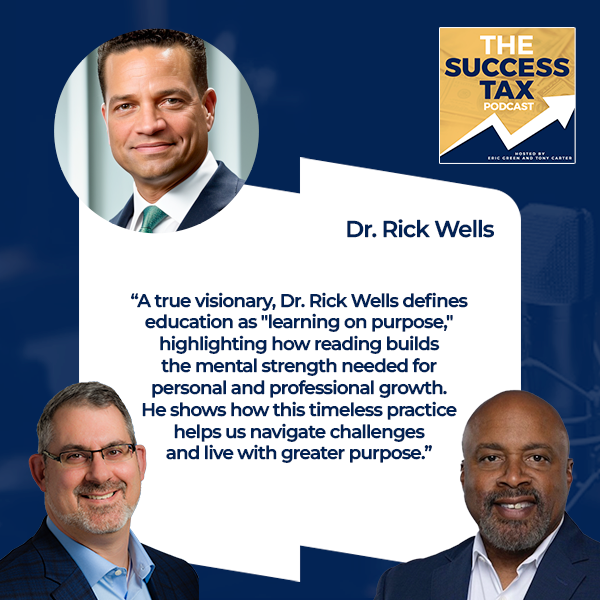
Thank you. Learning on purpose is my definition of education. If you’re looking to move yourself forward on any type of ambition, that ideal self that you have at the top of the mountain, you’re going to make the climb. You have your calling. You have the determination. You understand that there’s going to be challenges.
The next phase is, “What do I do? How do I develop the habit? How do I develop the ability? How do I develop the skill to get me to where I need to go?” I found primarily that it’s a function of reading. Reading is a powerful exercise. That will start to develop your mental capacity. For you to endure, associate, understand, and lead, become monk-like in your reading of what you want to accomplish. That’ll go a long way to help you get there.
I was thinking about this the other day. We’ll get back to entrepreneurship in a minute. My son and I had a moment the other day where we weren’t exactly seeing eye to eye on something. I took a minute to go sit and relax, and I thought about a book I read a while ago, and in terms of how I was going to re-engage him after the moment. It was Stephen Covey’s The 7 Habits of Highly Effective People.
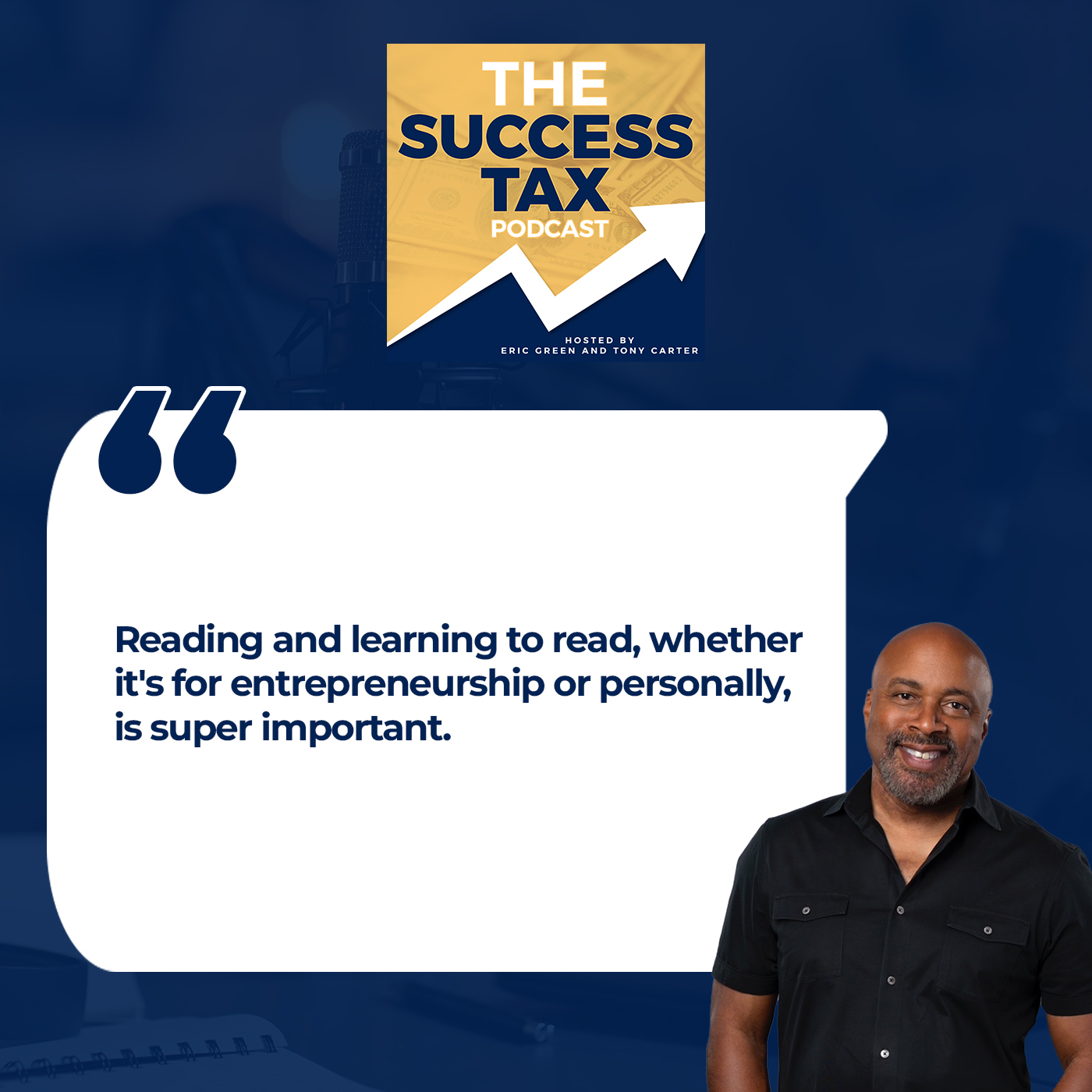
If you’re going to be an entrepreneur, a parent, or anything, you should read that book. The second habit is to seek first to understand than to be understood. I was in the garage, sitting there monk-like, thinking, “Let’s absorb that,” and then I re-engaged him and I told him, “This is my approach.” We had a great interaction, and all was well in the neighborhood again. Reading and learning to read, whether it’s for entrepreneurship or personally, is super important.
Reading Beyond Text: Situational Awareness & Mentorship
Along those lines, there’s reading like a physical book, but there’s also reading the situation. There was an interesting story about Nelson Mandela and how he became such a great leader. I don’t know if you’ve heard the story. He was interviewed and was asked, “How did you learn to be such a great leader?” He said that he went with his dad to tribal meetings. There were two things that his dad always did. First of all, everyone sat in a circle, and everyone was equal. Second, his dad was always the last to speak, for two reasons. One, everyone feels that they’ve been heard. Two, you get to hear all the opinions before you speak.
The commentary on this is that too many leaders walk into a boardroom and say, “Here’s the problem. Here’s what I think. Now, I’m interested in what you have to say.” It’s too late. Being able to read the room, like you did, you sat back and thought, I’m betting you went in and said, “I understand what you’re saying. Here was my approach,” which made him understand your approach. In other words, you’re not just digging in your heels and fighting.
My approach was similar, but I led with a question, thereby my mind is empowering him. It was that whatever I asked him, I was seeking clarity and a better understanding of what he’s intent was. What messages were you trying to convey? I was able to express, “This is how what you said landed on me, which brought us to where it brought us. Let’s start again with a very clear understanding of when we both sit on these things, remember, at the end of the day, I’m the boss. “All right, Dad.”
It may seem counterintuitive. What reading helps you do is develop better questions than anything. It’s a journey, and the mountain has no top. It’s continual. How do you think better? Another entrepreneurial book is Think and Grow Rich. How are you strengthening that mental muscle? Are you feeding it bubble gum every day, or is it something that will nourish the soul and the mind? The whole exercise of reading is essential and fundamental to move yourself forward.
The other book that comes to mind, and you and I talked about it always, was Robert Kiyosaki’s Rich Dad Poor Dad.
There’s a controversy around that book. If you’re not familiar with this, I’d be stunned. Kiyosaki wrote a whole series on Rich Dad Poor Dad. The controversy is that he never discusses who the rich dad is. People think he just made it up. That’s all nonsense. The takeaway of the book is how to think about investment and money. For instance, I would have told you, you’re a self-employed solo lawyer, and I have a business. You got a job. It’s the worst job in the world. One, because I work for a jerk. Two, if I don’t show up to work, I don’t get paid. It was that mindset that I was like, “How do I get into real estate investment?” He’s in real estate.
You’ll see all these people commenting online, “I want to invest in real estate.” That is one way to do that. I’m sitting, mulling this over, and I have a CPA. As a tax attorney, I still get business. By the way. We’re talking about reading. If you go back and you read about people who are in your field or who were super accomplished, understand that the process in that is never different. The platform might change. I used to rent a room, get food and drinks, invite them by mail, 300 accounts, and hope 30 or 40 showed up.
Today, I still send out emails to a few thousand accounts sitting on a webinar. I don’t leave my house, there are no drinks. No one has to travel, but the essence of what I’m doing has not changed. We’re here now, instead of getting people in a room. We’re now sitting in a studio, on something called the podcast, which didn’t exist before. My older daughter is now 22. When she was about 10 or 11, I got a new Mac and they gave us one of those iPod Touch. I gave it to her. There was no internet. It just played music that you could download. She said, “How old were you when you got your first iPod?” I’m like, “40.” They didn’t exist.
One of the greatest benefits of reading is that it helps you ask better questions than almost anything else Share on XAnyway, I’m mulling this over, and I do give one of these talks. I had a CPA walk up to me. He said, “I would pay you if you would teach me to do this.” I was like, “Huh.” I created a training program. Today, Tax Rep is a multi-million dollar training program with 200 hours. I got ten coaches, and it became this thing. Nothing has changed. The platform has changed, but the process has not changed. For those of you who say, “Napoleon Hill probably died 50 years ago. I don’t even know when that book was written,” it is every bit as on point today as it was then. The methods may have changed, but the message has not changed at all. In a way, that is timeless. It never changes.
The Timelessness Of Principles & The “Golden Thread” Of Knowledge
As you start your reading journey, you’ll find that there is a golden thread that runs through all of these books, themes, if you will. Archetypes, if you’re a union. There are vessels for thought that will help you move forward. That’s a fascinating moment when you realize the gist of it. When you read Think and Grow Rich, Rich Dad Poor Dad, and The 7 Habits of Highly Effective People, you’ll find that there’s a foundational text that they all refer to. Many of them are from the Bible, if you read it as a psychological text, and everything else.
That golden thread is when you realized that you got something here. As an entrepreneur and as an educator, there’s a reason why you do things. You can take a step further. The exercise is you realize that next week, you’re going to be deserted on an island, all by yourself, for a very long time, possibly for the rest of your life. You have an opportunity to bring ten books with you. Which ten do you bring? Anyone asking themselves, “I don’t read, but I’d like to start,” start with one of those titles, then you can take it further and say, “What is it about me that’s choosing these types of books?” You think about what book you would take, and now explore your own response to that. What is it about me that wants me to bring that book?
That’s interesting, or maybe, “What about my circumstances, perhaps?” Depending on whether you’re on an island.
That’s interesting. Your mind goes to circumstances. My mind goes to where my thoughts would be, not thinking of the circumstances.
I went to all three. I need a book on how to survive on an island. I want 5 or 6 books to help grow, and then I need three of the Bloom County Comics. You should have made three books.
My question was, does Shakespeare count as one book?
What are the rules of this game?
He has to be an author, not a book. Although you pick the riverside Shakespeare.
Does that count as one?
I think that’s one book.
I’m asking an attorney. There you go. You can see where each of our minds went, and there’s no wrong answer, but it does give you a part of the solution as far as what game you’re playing. How are you going to approach climbing the mountain? Who may you need as a support person along the way? Quite honestly, authors are your support personnel in your journey, which makes that search for meaning, that climb, powerful to me.
I like the way you put that. That authors are the support on your journey if you allow them to be.
You can find mentors everywhere, even if you never meet them. Andrew Carnegie can be a mentor, or Nelson Rockefeller. You can go and read. I’ve got news for you. I’ve got all those books. I also have some other books. Frank Costello, Tony Accardo, the gangsters. I’ve got to tell you something. There are a lot of interesting business lessons. I might leave out the knee-breaking part, that kind of stuff, but I find that there are lots of people who have dealt with these issues before. I know it’s like, “That was 100 years.” It doesn’t matter. They have the same problems we have.
Again, platforms might change. Obviously, our society has shifted, but the bottom line is that the problems, the business issues, and the personal issues are still the same. You can go and get mentoring from people who have been through this before. On the text side, I would almost suggest finding some good YouTube channels because they move quickly. You get a book. It’s already two years old. It has already moved on, but there were people who put out a content game plan right here. There are people who put out content every day. Just find good content.
The Transformative Power Of Persistent Reading & Learning from Others
It’ll provide context. It will help to flesh out your reading. It’ll deepen your perspective. That foundational reading discipline is a struggle. It’s a challenge to come to grips with what they’re actually saying. Everyone has read a book, then gone back and revisited it a decade later, and been amazed at what they either missed or reinterpreted at the end. Books and their modes of thought develop. With me, reading provided the lens through which I can see this life.
Authors are your support personnel on the journey, which makes that search for meaning—that climb—all the more powerful. Share on XLife-changing for me was Epictetus. He gave me a definition of education that was all-encompassing. I haven’t found a better one yet, where it deals with engaging your capacity to endure. It involves how you associate with the people around you. It involves improving your understanding and maturity. It involves how you lead a good life. That lens allowed me to see the world as an educator. I couldn’t be more thankful. I was searching, Man’s Search For Meaning, Viktor Frankl. Now, the burden becomes the thing, becomes the point to educate for me, particularly with young people and their fundamentals of reading, writing, and computing, and now further with families in creating a solid foundation to lead their children.
Have you ever found yourself where you made the right decision, and you realize it was something you’d read about or learned years and years before, and it suddenly applies? I find it now, I don’t want to say all the time, but it comes up a lot more where something will happen and I’ll do something. I’m like, “I remember reading about this.” What amazes me is how much it impacted me. I subconsciously remembered it, and it impacted my thinking.
When I was searching for what to do after my active duty time in the Marine Corps, I came in contact, as I mentioned before, with Joseph Campbell, the mythologist. I guess he was searching for himself. He went and spent five years reading in a tent in upstate New York somewhere. That fascinated me, the fact that you can go and read. What did he realize at that point from that reading? He came back. He said that his yoga is underlining sentences. I went to his library. I think it is in Ohio, California. I saw one of his books. He underlined his sentences with this type of bookmark.
That put me on this reading journey with Campbell. He came back and he became a teacher. To Eric’s point about YouTube and lectures, I remember hearing him saying, “If you dedicate your life to teaching young people, that’s something.” I heard that, and after I retired, I was like, “He might have influenced me in going to teach young people.” I needed to hear someone say, “This is worthwhile.” I needed to read about and learn about someone whose life journey took down into work that matters. This is worthwhile. This is worth your time and attention. To that point, that must have been a powerful moment because I spent the next two decades or so doing that thing.
That is your purpose, at least in part.
It’s a way to supplement at least the work, but to find that conceptual lens that makes meaning out of my life was to think. Find that fundamental idea, read about it, study it, and practice. Study, practice, teach.
I’m a huge fan of audiobooks.
If they’re unabridged, I’m a huge fan.
When I’m traveling between places or if I have a longer ride or longer commute, I turn that thing on, and I’m getting the full effect of it.
Brian Tracy calls it University on Wheels. I must have listened to and read almost every Louis L’Amour book. Adults love to be read aloud to, too. It just stops. It doesn’t mean it should. It’d be worthwhile. I know many people who do read aloud to each other. I know couples I’ve heard of who read to each other on those long journeys. Not just listen to the book, but they read to each other. That’s a wonderful discipline as well. I’m a big fan of audiobooks.
I saw this app, Wiser or something. Have you seen that? You’re not going to like it because it’s abridged.
It’s like Blinkist. That’s another one, where it summarizes the chapters and the lessons. I do have that app. Wiser is a competitor. What I like about Blinkist is that when newer books come out, I can get a summary, and then I can decide whether this is something I want to read. Often, I will do that, then I’ll go by the book on Audible and go through the whole book, and then there’s other stuff. There’s a best-selling book. Don’t buy it. It’s written by a blogger or something. The Subtle Art of Not Giving a F*ck or something like that.
I can summarize the whole book for you in one sentence, which is that we are so busy and distracted that we don’t even know what to care about anymore. I don’t remember how many, but it was 150 pages of that. I could have put it down after the first three pages. Had I listened to it on Blinkist, it would have been like, “I don’t need to read that.” I’m somebody who doesn’t mind swearing. The whole book, from start to finish, is f-bombs through the whole thing. Even I was like, “Okay, enough.”
You can’t focus on the bubble gum for the mind. An interesting exercise for you to do to realize the purpose of the game you’re playing is to imagine yourself going into a bookstore. Which part of that bookstore do you go to first? I tend to go toward the philosophical and the historical fiction. Got an exercise in that, and then now you start to reveal to yourself what kind of person you are. To Eric’s point earlier about seeing the way, it’s not all revealed in text. As a child, what board games did you enjoy? That will let you know a little bit about your strategic thinking.
Monopoly.
Monopoly as well, and I always win, but I know a cousin who did win, shout out to David. He’s been on Wall Street for 30 years. It would probably be obscene to talk about the amount of money that he deals with as an investment banker and what he’s been doing on Wall Street, but even always wins Monopoly.
If you want to discover the purpose of the game you're playing, walk into a bookstore and notice where you go first. That section reveals who you really are. Share on XRisk.
There you go. This is real.
It all started with Monopoly.
That question you posed about when you go into a bookstore, where do you go? There was a time, and I don’t remember when it started, but the Brian Tracys and the Kiyosakis might have been the self-help. I’m not sure what section that would be, or psychology. I would sit on the floor, find a spot, and start to go through those books. It resonated with me right from the beginning. It was hard to put down a lot of them.
I have a whole set from Kiyosaki. The whole set of everything, CASHFLOW Quadrant, I bought and read all of them.
The Discipline Of Reading & Reflective Practice
The discipline of reading and learning is often, like many other things, difficult to begin. Start small. Human behavior is very difficult to change. Fifteen minutes of reading or ten pages a day, if you’ve seen the Challenge 75 hard, ten pages a day of non-fiction toward what you’re becoming better at is something that you can start right now with that discipline. I can almost guarantee that it will change your life.
Ten pages a day. How many days?
Seventy-five.
I’m going to take you up on that. I’m going to give that a shot. I don’t think it should be an audiobook.
That has to be a published work. That’s the benefit of a published work, a serious thinker, the great thinkers about a particular way of being. It will help you with the questions. What is success? What am I here to do? You’ll see people who were serious and able to publish it. What is it that made their life more meaningful?
I can’t help but think, we talked about this earlier, the gap between knowing and doing.
The knowing and doing gap is that you have the impulse, whether you do it or not. You need to learn by doing. Often people just do the damn thing. It’s learned by doing. I think the learning heavily involves reading and reflection, then from your reading and reflection, you resolve to do.
When you say reflection, what do you picture or envision?
That’s Medusa all day. Her ensemble of being stuck. She turned those to stone, the being stuck, usually from having two smaller goals. She was conquered by Perseus using his reflective shield, the reflection in his shield. He cut her head off, body is on the floor. What springs up? Pegasus, the symbol of creativity, and Chrysaor with the golden sword of discretion. Combine those two things. What’s the best way to reflect? This is Brian Tracy. What went well today? What would I do differently next time? I would add, depending on what area of life you’re improving upon, how can I show up better for my family, my clients, my college, my partner, or my spouse? That act of reflection will help you to resolve a resolution with yourself to do, which will shorten the knowing, doing, and getting.
The L is most certainly about learning. I don’t know about you, but since we started this nine-part series of game plan, I have learned a lot. It has been about my own sets of reflection. I very much appreciate your time, energy, and effort. If any of you have felt the same as I do, and you have learned a lot on this journey, please like and subscribe to the show.
Also, comment. We’d love to hear what you think. Anything you’ve got to add to the conversation would be great. I’m looking forward to the next two.
Very much so. The last episode, be sure not to miss it. We’re going to talk about different areas where this game plan format can be expressed. As always, we very much appreciate your time, energy, and effort for tuning into the show. Until the next time, take care.
Important Links
- Dr. Rick Wells on LinkedIn
- The 7 Habits of Highly Effective People
- Think and Grow Rich
- Rich Dad Poor Dad
- Man’s Search For Meaning
- The Subtle Art of Not Giving a F*ck
- Rich Dad’s CASHFLOW Quadrant
- Wiser
- Blinkist
About Rick Wells
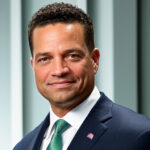 Rick Wells is a dedicated leader, educator, and advisor with over three decades of service to his community and country. A retired Lieutenant Colonel in the United States Marine Corps Reserve, Dr. Wells spent his military career in both active duty and reserve roles, culminating in his retirement after years of exemplary service.
In addition to his military career, Dr. Wells retired as a highly respected elementary school teacher from the West Hartford Public Schools. Throughout his tenure, he inspired young minds with a commitment to fostering growth, resilience, and achievement. His innovative approach to education emphasized the importance of perseverance, mastery, and the cultivation of self-awareness—skills he believes are foundational to both academic and personal success.
As a financial advisor, Dr. Wells brings his service-oriented ethos to helping families, professionals, and organizations build strong financial futures. His expertise in retirement planning and wealth management reflects his dedication to guiding others through challenges to create sustainable solutions that align with their values and goals.
A staunch advocate of health and wellness, Dr. Wells champions the principles of commitment and consistency as a key to building strength and overcoming challenges. Drawing from his military, educational, and personal wellness journey, he inspires others to embrace challenges as opportunities for mental, physical, and spiritual growth.
Through his work as a mentor, speaker, and advisor, Dr. Wells shares powerful insights on goal setting, leadership, and wellness. With decades of dedicated service to the community and the country, Dr. Wells continues to lead by example, offering practical strategies to elevate individuals and organizations alike.